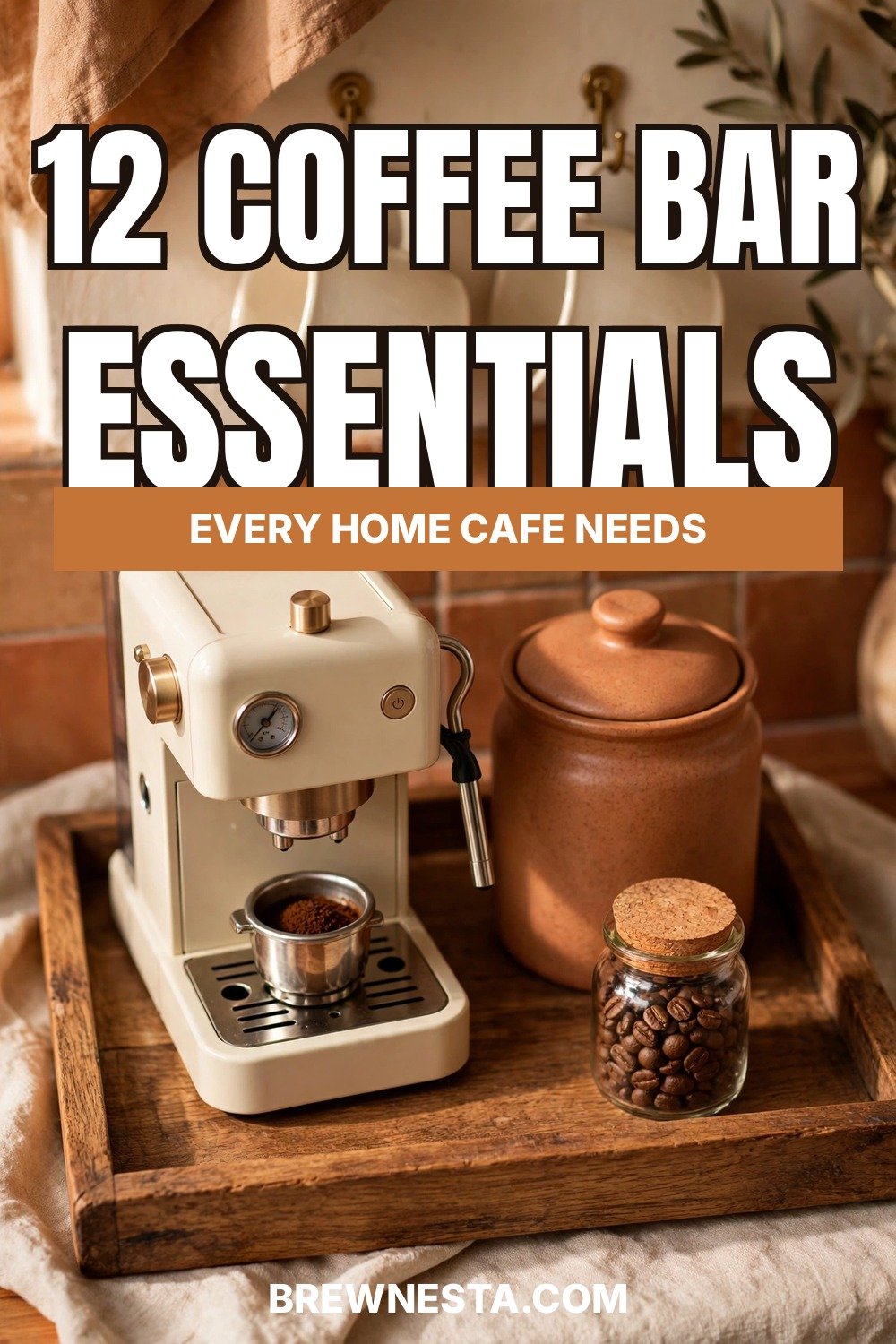
Coffee Bar Essentials Checklist: 12 Things Every Home Cafe Needs
Introduction: Your Home Cafe Starts With a List, Not a Shopping Spree
Walk into any home goods store and you will find an entire aisle trying to convince you that a home coffee bar needs forty things. A special spoon for this, a matching jar for that, a gadget you will use twice and then store in a cabinet forever. Most of it is noise — and noise is exactly what a small kitchen cannot afford.
The truth is simpler. A working home coffee bar needs twelve things. Not forty, not five, twelve. And if your budget is tight or your counter is tiny, you can open for business with just seven of them and add the rest later, when you actually miss them.
This coffee bar essentials checklist for a small home cafe is built for real apartments and real budgets. Every item below comes with a realistic price, the counter space it takes up, and a clear verdict — must-have, nice-to-have, or skip for now. At the end you will find three complete builds (under $50, under $100 and under $250), the footprint of a full bar, and the mistakes that waste the most money. Two rules first: buy in order (items 1–7 open your cafe, items 8–12 make it better), and measure your spot — width, depth, and the gap between counter and upper cabinets — before you spend anything. Our guide to how to build a coffee bar in a small kitchen covers the five measurements to take first.
The 12 Essentials
1. A Brewer That Matches Your Routine (Must-Have) — $25–$300, 8–12 inches wide
The right brewer matches how you actually drink coffee, not the prettiest photo. A pod machine is right if you want one cup, fast, with no learning curve ($60–$150). A drip machine suits households where two or more people drink at once (from about $25). A pour-over cone costs under $20 and makes the best cup, but needs five unhurried minutes and a kettle. A French press ($20–$30) is the cheapest real brewer and needs no electricity. Skip the espresso machine for now unless lattes are the whole point — decent ones start at $300-plus and demand a grinder, a scale and practice. Footprint: 8–12 inches wide, the biggest item on your bar. Place it first and build around it.
2. A Burr Grinder (Must-Have) — $30–$100, 5 inches wide
If you buy whole beans, this matters more than the brewer itself. A burr grinder crushes beans into even, uniform pieces, so the cup tastes clean instead of bitter one sip and sour the next. A blade grinder chops unevenly, and no brewer can fix that. A hand burr grinder costs $30–$50 and suits one or two cups a day; a good electric burr grinder runs $60–$100. Skip it only if you buy pre-ground coffee — then buy small bags and use them within two weeks, because ground coffee goes stale fast. Footprint: about 5 inches wide beside the brewer; a hand grinder lives in a drawer between uses.
3. An Airtight Coffee Canister (Must-Have) — $12–$25, 4–5 inches wide
Coffee’s enemies are air, moisture, heat and light, and an open bag invites all four. An opaque, airtight canister keeps beans fresh for two to three weeks instead of a few days. Glass looks lovely but lets light in, so choose ceramic, stainless steel or opaque plastic — or keep a glass canister inside a cabinet. One canister is enough; a second earns its place only if your household drinks two roasts. A 12-ounce bag fits a 1-quart canister. Footprint: 4–5 inches wide, about 7 inches tall. This makes the biggest difference to taste for the least money — buy it before anything decorative.
4. A Kettle (Must-Have) — $20–$60, 6 inches wide
You need hot water even if your brewer heats its own. A kettle covers pour-over, French press, tea, cocoa and cleaning water, and it is the cheapest way to add a second brew method. A basic electric kettle costs $20–$30; a gooseneck with temperature control runs $40–$60 and is worth it the moment you try pour-over, because slow, controlled pouring is what makes pour-over taste good. If you drink tea or cocoa too, the kettle earns its space twice over. Footprint: about 6 inches wide. In a very small bar, keep it on the shelf above and bring it down to brew.
5. A Digital Kitchen Scale (Must-Have) — $12–$20, 5 inches wide
This twelve-dollar upgrade separates good coffee from great coffee. The right coffee-to-water ratio is about 1:16 — one gram of coffee per sixteen grams of water — and guessing by scoops is why the same beans taste different every morning. A small digital scale with 0.1-gram resolution costs $12–$20 and removes the single biggest variable in brewing. Skip the fancy coffee-specific scales with timers and Bluetooth; a plain kitchen scale does the same job for a third of the price. Footprint: about 5 inches wide and nearly flat — it slides under the brewer or lives in a drawer.
6. A Milk Frother (Must-Have for Milk Drinks) — $15–$40, 4 inches wide
If you drink your coffee black, skip this. If you love lattes, cappuccinos or iced coffee with cold foam, a frother is the cheapest way to get cafe texture at home. A handheld wand costs $10–$15 but makes thin foam. An electric jug frother heats and froths at the push of a button for $25–$40, and it is the one most small bars should buy. It also froths oat, almond and soy milk — oat foams best of the dairy-free options. Footprint: about 4 inches wide, roughly the size of a mug. Keep it beside the brewer so it is part of the morning flow.
7. Two to Four Mugs You Actually Love (Must-Have) — $8–$25 total, 0 inches of counter
Mugs should take up zero counter space. Two per coffee drinker is right: one in use, one in the dishwasher. Hang them on hooks under a cabinet, stand them on a mug tree, or keep them in the cabinet above the bar — anywhere except the counter. A set of four ceramic mugs costs $8–$25 at discount stores, and thrift stores are full of beautiful single mugs for a dollar or two. For iced coffee, add two tall glasses for about $8 a pair. Footprint: zero, if you hang or shelve them. If mugs are eating your counter, our 15 coffee bar organization ideas for tiny kitchens shows how to get them off the surface.
8. Syrups, Sweeteners and a Place to Put Them (Nice-to-Have) — $15–$30, 6 inches wide
This is where a home cafe starts to feel like a real cafe. One or two syrups — vanilla and caramel cover almost every drink — plus a sugar jar and a small jar of cinnamon or cocoa. Syrup bottles with pumps cost $8–$12 each and last months; buy the pumps separately for $3–$5 each, because bottles rarely include them and a pump is what stops the sticky mess. Keep the group on a small tray or in a narrow caddy so it reads as one tidy unit. Footprint: about 6 inches wide. Start with vanilla only — half-used syrup bottles are the most common clutter on abandoned coffee bars.
9. Pod or Filter Storage (Nice-to-Have) — $10–$25, 0–8 inches wide
Loose pods and filters are clutter magnets. If you use pods, a drawer that slides under the brewer is the smartest storage in a small kitchen: it holds 30 or more pods, takes no extra counter, and costs $15–$25. A spinning carousel costs about the same but eats counter space. If you brew drip or pour-over, a small basket or jar for filters costs under $10. Footprint: zero for an under-brewer drawer, about 8 inches for a carousel. Buy this only after choosing your brewer — pod storage is useless if you switch to pour-over a month later.
10. A Tray or Mat to Define the Zone (Nice-to-Have) — $10–$20, 12–18 inches wide
A tray is the cheapest styling trick on this list. It gathers the brewer, canister and small items into one visual group, catches drips and stray grounds, and marks this patch of counter as the coffee bar. A wooden tray, marble slab or bamboo mat all work — $10–$20, or under $5 at a thrift store. Size it to your bar: 12 inches for a single-brewer setup, up to 18 for a full station. A silicone mat under the brewer alone is the budget version at $5–$8. Footprint: this is the footprint — the tray is the bar’s border, so everything else should sit inside it.
11. A Spoon Cup, Stirrers and Napkins (Nice-to-Have) — $5–$10, 3 inches wide
A spoon cup — a small jar holding teaspoons, stir sticks and straws — means you never hunt through a drawer with wet hands. Add a small stack of napkins or a folded cloth, and the bar cleans itself as you go. A mason jar, thrifted crock or small ceramic cup all work; this is a five-dollar item, not a twenty-dollar one, so do not buy a matching set. Footprint: about 3 inches wide at the end of the tray. It is also the easiest item to get for free — you almost certainly own a jar and some spoons already.
12. A Cleaning Kit (Must-Have, and the One Everyone Forgets) — $8–$15, fits in a drawer
A coffee bar that is hard to clean becomes a bar you stop using. Keep a microfiber cloth, a small bottle of descaler or white vinegar, and a brush for the grinder together in one spot — a drawer, a jar, or a small basket under the bar. Descale a pod or drip machine every one to three months; wipe the brewer and tray daily, which takes thirty seconds when the cloth lives at the bar. Descaler costs $5–$8 a bottle and lasts a year; white vinegar works for most machines at a fraction of that. Footprint: zero counter space. Skip the specialized cleaning kits until you own an espresso machine.
The Printable Checklist
Tick what you own, then buy only the gaps — in this order.
- ☐ 1. Brewer — pod, drip, pour-over or French press
- ☐ 2. Burr grinder — hand ($30–$50) or electric ($60–$100)
- ☐ 3. Airtight canister — opaque, 1-quart
- ☐ 4. Kettle — electric or gooseneck
- ☐ 5. Digital scale — 0.1 g resolution
- ☐ 6. Milk frother — electric jug beats a wand
- ☐ 7. Mugs — 2 per drinker, hung or shelved, never on the counter
- ☐ 8. Syrups & sweeteners — start with vanilla
- ☐ 9. Pod/filter storage — under-brewer drawer if you use pods
- ☐ 10. Tray or mat — defines the zone, catches drips
- ☐ 11. Spoon cup & napkins — you probably own these already
- ☐ 12. Cleaning kit — cloth, descaler, grinder brush
The 7-piece starter kit: items 1–7 only. That is a complete home cafe. Everything after item 7 is an upgrade, not a requirement.
Three Complete Builds: Under $50, Under $100, Under $250
What does the whole thing cost as a set? Prices are typical US prices for solid basic gear — not the cheapest listing online, and not premium brands.
The Under-$50 Starter Bar — $47 total
The “open this weekend” build. It assumes you already own mugs, spoons and a jar or two.
| Item | Pick | Price |
|---|---|---|
| Brewer | French press | $22 |
| Canister | Opaque ceramic jar | $12 |
| Scale | Basic digital kitchen scale | $13 |
| Total | $47 |
Heat water in a saucepan for now — not elegant, but it works. The coffee is genuinely good: fresh beans, a proper ratio, and a press that costs less than two cafe lattes.
The Under-$100 Everyday Bar — $96 total
The sweet spot for most small kitchens: everything for daily coffee, nothing you will regret.
| Item | Pick | Price |
|---|---|---|
| Brewer | Drip machine | $28 |
| Burr grinder | Hand burr grinder | $35 |
| Canister | Airtight steel canister | $15 |
| Frother | Electric jug frother | $18 |
| Total | $96 |
Add mugs from your cabinet, a thrift-store tray for $4 and a vanilla syrup for $9, and you are still under $110 with a bar that makes drip coffee, lattes and iced drinks. For what the same money does for the whole setup, see our 21 small coffee bar ideas for apartments under $100.
The Under-$250 Full Home Cafe — $243 total
For the household that drinks coffee all day and wants every method covered.
| Item | Pick | Price |
|---|---|---|
| Brewer | Pod machine | $89 |
| Burr grinder | Electric burr grinder | $65 |
| Kettle | Gooseneck with temperature control | $45 |
| Canister | Airtight steel canister | $15 |
| Scale | Digital kitchen scale | $13 |
| Frother | Electric jug frother | $16 |
| Total | $243 |
Pod coffee in ninety seconds, pour-over on slow mornings, lattes whenever the mood strikes. Notice what is on none of these lists: an espresso machine. Add one later, when the rest of the bar is earning its keep — an upgrade to a working cafe, not an expensive guess.
How Much Counter Space Does a Full Bar Take?
Less than you fear. A brewer (10 inches) plus grinder (5) plus canister (5) plus frother (4) plus the syrup group (6) fits in about 30 inches of width — and less if you go vertical with a shelf or riser. The kettle, scale and cleaning kit live on a shelf or in a drawer, and the mugs hang above. In practice, a complete 12-item bar runs happily on 24 to 30 inches of counter. If your spot is narrower than 24 inches, start with the 7-piece kit and add a floating shelf before you add more gear.
5 Mistakes That Waste the Most Money
1. Buying the espresso machine first. The most expensive item, the most accessories, the least forgiving of beginners. Build the bar, learn your taste, then decide if espresso is worth $300-plus.
2. Buying decor before gear. A cute sign does not make coffee. Signs and matching jars are the last 10% of a coffee bar — and the first thing beginners buy. Gear first, styling last.
3. Buying every syrup at once. Six bottles look great in a photo and go stale in a cabinet. One flavor you use daily beats six you use monthly.
4. Skipping the grinder to afford a fancier brewer. A $200 brewer with a blade grinder makes worse coffee than a $30 brewer with a burr grinder. Grind quality decides taste more than any other factor.
5. Buying storage for a system you have not chosen. Choose the brewer first, live with it for two weeks, then buy the storage that fits what you actually do every morning.
Frequently Asked Questions
What are the absolute essentials for a home coffee bar?
Seven things: a brewer, a burr grinder (or pre-ground coffee in small bags), an airtight canister, a kettle, a digital scale, a milk frother if you drink milk drinks, and two mugs per person. The other five items on this checklist make the bar better, but it works without them.
How much does it cost to set up a small coffee bar at home?
A working bar starts at about $47; $96 covers a complete everyday setup; $243 builds a full home cafe. Most small kitchens land happily near $100. The expensive mistake is buying the wrong things first.
How much counter space do I need for a coffee bar?
A complete 12-item bar fits in 24 to 30 inches of counter width; a 7-piece starter kit needs about 18 inches. If your spot is smaller, use the wall: a floating shelf, hooks under the cabinet, or a slim cart. Measure before buying anything.
Do I need an espresso machine for a home coffee bar?
No. Most home cafes run beautifully on a pod machine, drip machine, pour-over or French press. An espresso machine is worth it only if lattes are your daily drink and you are ready to spend $300 or more plus a grinder and a scale. Start without one — you can always add it later.
What should I buy first for a coffee bar?
Buy in this order: brewer, grinder, canister, kettle, scale. Those five decide how your coffee tastes. Then add the frother and mugs, and only after that the syrups, storage and styling. Buying in order means every dollar improves your morning from day one.
Conclusion: Tick the Boxes, Then Make Coffee
A home coffee bar is not a project to finish — it is a small system that pays you back every morning. Tick what you already own, buy the gaps in order — brewer, grinder, canister, kettle, scale — and open with the seven-piece kit. Add the rest when you miss it.
If you have not set up your spot yet, read our guide to how to build a coffee bar in a small kitchen next, and once the gear is in place, the 15 coffee bar organization ideas for tiny kitchens will keep it tidy. Then make a cup with the bar you just built. That first slow morning is the whole point.
One Comment